West Asheville doesn't try to impress anyone. Mill houses, working artists, a bike path that actually gets you somewhere, and the shortest hop to Bent Creek of any neighborhood in this guide.
The vibe
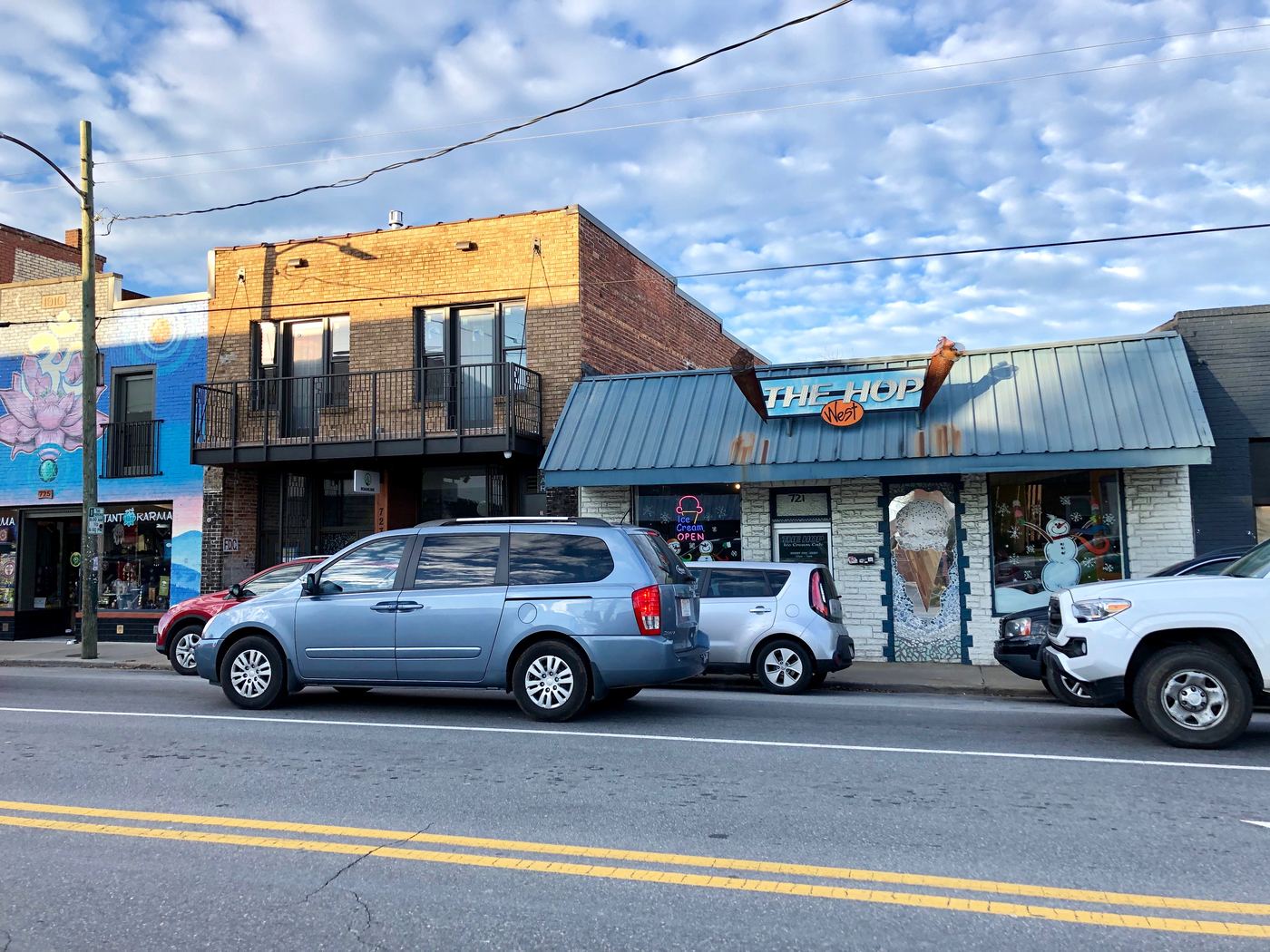
Working-class roots, artsy now, still not polished. About 14,800 people, median age 39, average income around $41K. This isn't the money side of Asheville. It's the creative-class side, roughly 185 working artists call it home.
Side streets off Haywood Road wind through old bungalows and converted mill houses. Malvern Hills gets you bigger lots and a community pool. Falconhurst gets you quiet streets that still walk to Haywood. If downtown feels like a tourist set, this is the neighborhood built for people who actually live here.
Walkability
Haywood Road scores 68 to 82 depending on the block, solidly "Very Walkable." West Asheville Estates hits 73, the second most walkable sub-neighborhood in the city. The catch: Haywood itself has almost no dedicated bike infrastructure. The Greenway, not the road, is the cycling asset here.
Coffee
No shortage here. BattleCat Coffee Bar, Odd's Cafe, Izzy's Coffee, and Bad Manners Coffee cover the daily grind. OWL Bakery is the pastry-and-espresso stop with a patio worth lingering on. Cooperative Coffee has the best outdoor seating in the neighborhood, and Rowan Coffee opened a new location here in April 2025.
Breweries & food
Archetype Brewing and Oyster House Brewing (their oyster stout is the move) anchor Haywood Road. Zillicoah and Cellarest round out the beer scene. Westville Pub has been the neighborhood bar since 2002, the original before West Asheville got a reputation. For food: Jargon for New American, Sunny Pointe Cafe for brunch, Nine Mile West for Caribbean-pasta, Biscuit Head for the classic Asheville breakfast pile.
Grocery
West Village Market & Deli covers everyday natural foods right in the neighborhood. Trader Joe's is downtown at 90 Biltmore Ave, not here. French Broad Food Co-op is also downtown. Day-to-day works fine locally. The real grocery run means a short drive.
Housing
West Asheville Estates runs a median of $635K, up 6.5% year over year. The broader neighborhood tracks near or slightly above Asheville's citywide median of roughly $507K, and the city overall softened into more of a buyer's market through 2026. Expect mid-century bungalows and renovated mill houses, not new construction.
Riding
This is the trump card. West Asheville sits closest to Bent Creek of anywhere in the city, and Kolo Bike Park is basically a local amenity, not a destination. DuPont and Pisgah are the same drive from here as from most of Asheville, but you're not adding time on top of an already-long day. The French Broad River Greenway also means you can get on a bike at your front door and ride to Carrier Park or into RAD without touching a car.
- Bent Creek 10-15 min
- DuPont 45 min
- Pisgah 1 hour
- Kolo Bike Park 8-10 min
One flag: the French Broad River Park segment of the greenway closed after the 2024 Helene flooding. Worth confirming it's fully reopened before you bank on it.
Our take
This is the strongest fit of the three for your actual life, and it's not really close. Haywood Road is genuinely walkable (68-82 depending on the block), the coffee and brewery density beats Montford easily and matches RAD without RAD's flood risk, and the mill-house housing stock has real character without North Asheville money. It's not fancy, and it won't photograph like a magazine spread, but it's the neighborhood built for people who actually live here. The bonus: best MTB access of the three, Bent Creek out the door, Kolo down the street. If a walkable, bike-to-coffee daily life and a strong food scene matter most, West Asheville is the answer, and you get the riding for free.